
Making Safe Drinking Water for Life!
Work
In Progress (updated 02-18-13)
This page briefly discusses some of my water projects that are in development. When I have proven these ideas, I will publish them on my main page and notify interested parties. I include this page with the hope of receiving additional feedback on the scope and direction of my water projects from the community. Projects are arranged chronologically, so that my most recent developments appear at the top of the page. Click here to see the hazardous water treatment model that I am following. Compact Desalination Machine In February (2013), I began formulating plans for a compact, human powered desalination machine. Figures 1 and 2 show, in principle, how I plan to do this. Basically, I want to combine the mechanical leverage of a double-ratchet fruit press with a watertight silicone bladder, bagpipes (vents), steel vessel, and seawater reverse osmotic filter to press freshwater from seawater, brackish water and salty ground water. The press would squeeze the saltwater stored in the bladder and force it through the filter. DOW Filmtec seawater reverse osmotic filters are made to operate at 800 psi, However, DOW Filmtec brackish water filters can operate as low as 100 psi - very doable. The challenge will be with seawater. However, I believe we can gradually and safely crank down on the bladder to start the flow of saltwater through the filter. This would produce fresh drinking water on demand from saltwater. This could be made compact and portable so that all people can have an ample supply of drinking water in cases of emergency. Because it is human powered, this desalinator would be available to the 1.5 billion people that are off the grid too. The compact desalinator could produce at least 100 gallons of drinking water per day. Sand Ponds In December (2010), I was inspired by the work of Excellent Development using sand dams in Kenya to conserve and harvest rainwater. This prompted me to think of similar ways to harvest stored rainwater - when sand dams are not practical or applicable. One suggestion is manmade 'sand ponds' - large, deep pits in the ground that are lined with water-proof plastic and filled back with sand. Figure 3 shows a drawing of what a typical sand pond may look like. The sand pond is like a poor man's below ground cistern. Like a cistern, water does not evaporate from the sand pond as it would in a normal pond. The sand traps water between its particles and works as a natural filter making the below ground water safe to drink. The water-proof lining would be made from food-safe, polyethylene. I think large tank liners and swimming pool liners could be adapted for sand ponds. The ponds (cisterns) would be dug before the rainy season, lined with plastic, filled with sand and vertical PVC (4" diameter) pipes. The vertical pipes will serve as wells to collect water when needed and capped when not in use. Buried with sand, plastic liners and PVC could last for hundreds of years. Sand ponds would take advantage of natural and manmade topographic gradients where rainwater flows and accumulates. These locations include dry river beds, roadsides, borrow pits, hill bottoms and valleys near the community. These locations may only be limited by the availability of sand and suitable liners. These sand ponds could be an affordable alternative for people living in semi-arid places when sand dams are not an option. The sand ponds are a scalable solution that could be built and sustained by local people using supplied liners and tools. Finally, sand ponds may be easier and less expensive to build than sand dams because no cement is needed. SunFlower - Water Pasteurization Tool The SunFlower is a large capacity solar cooker made from a large bowl (~20 quarts) and a 3-ft square sheet of aluminum canvas. The bowl may be made of any durable material including metal, plastic or wicker. Figure 4 shows a SunFower heating water in a 5-gallon plastic vessel that is wrapped in a black thermal blanket and covered with a large oven bag to conserve heat. In its current configuration, the SunFlower is designed to work with any vessel up to ~5-gallons in volume. A 21-quart black enamel metal stockpot is ideal, but vessels made from fired clay, glass or plastic will work too. The SunFower can be assembled in about 2 minutes and is easy to maintain and store. When handmade wicker bowls are used, the material costs are very low. Field Testing - H2S Water Testing Lead acetate test paper in 100-ml bottles will be used to field test water sources for bacteria. Bacteria produce hydrogen sulfide (H2S) that turns the water and test strips black within 24-30 hours. I will use a color chart to estimate the bacteria count (ppm). |

Figure 1. Compact Desalinator, Concept - Click to Enlarge. 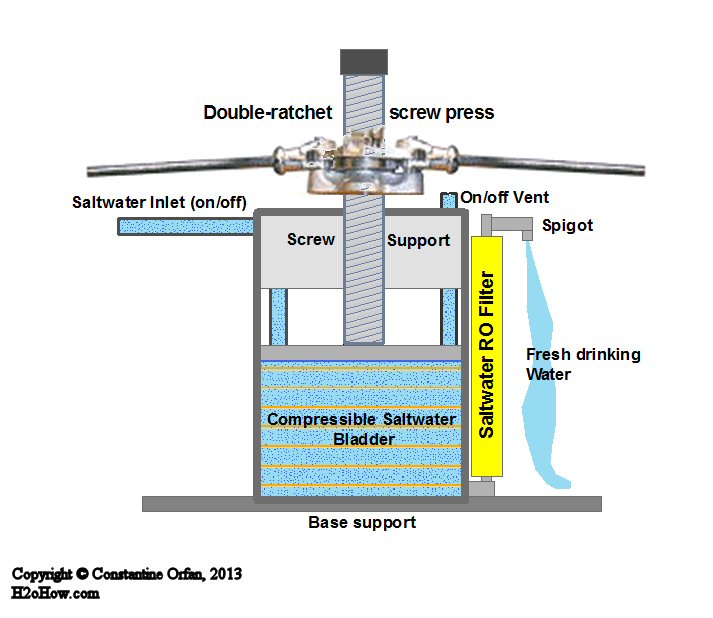
Figure 2. Compact Desalinator, Model - Click to Enlarge. 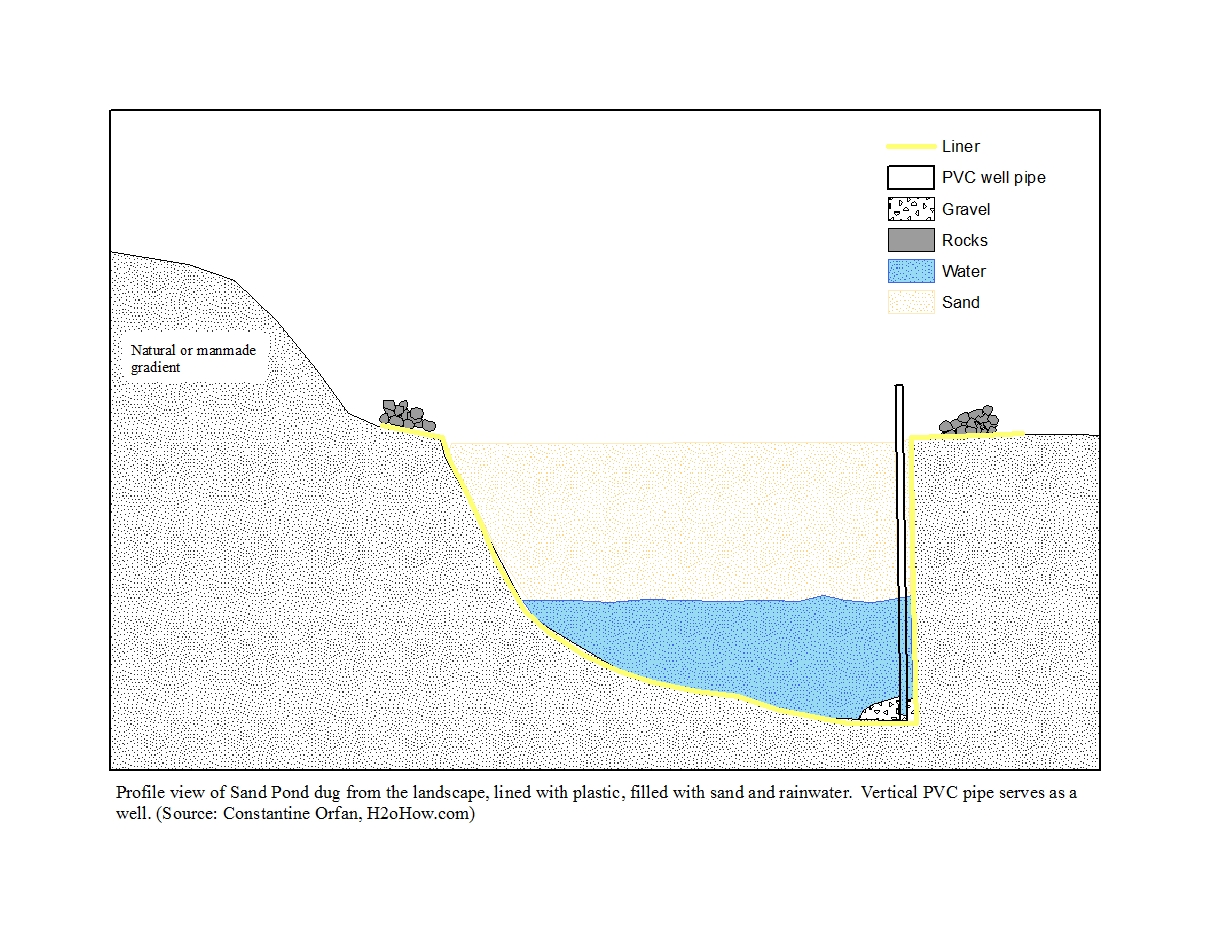
Figure 3. Sand Pond (Drawing) - Click to Enlarge. 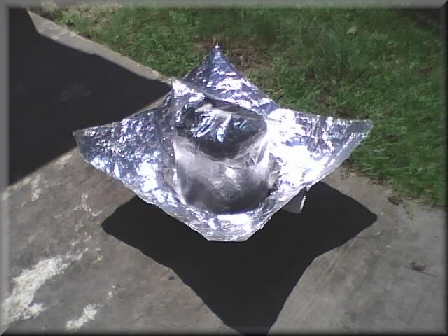
Figure 4. Large capacity solar water pasteurization using the 'SunFlower' solar cooker. The SunFlower is designed to heat water vessels up to five (5) gallons (~20 liters). |